


Ghana Customs Clearance: A Complete Importer's Guide
How customs clearance works at Tema Port and Kotoka Airport — documents, duties, the clearance process, common delays, and how to get your goods released fast.
What Is Ghana Customs Clearance?
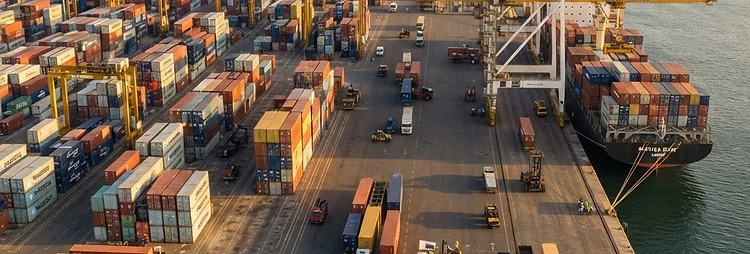
Customs clearance is the legal process every shipment must go through when entering Ghana. Whether your goods arrive at Tema Port by sea or Kotoka International Airport by air, Ghana Customs Division must inspect the shipment, verify the documentation, assess and collect import duties and taxes, and authorize the release of the cargo. No goods can leave the port or airport until customs clearance is complete.
For most importers, customs is the most intimidating part of the shipping process — but it doesn't have to be. Welkies handles the entire customs clearance process on your behalf, from document preparation through duty payment and final release. This guide explains how the process works, what documents you need, how duties are calculated, and what you can do to avoid delays.
The Ghana Customs Clearance Process
Customs clearance follows a defined sequence of steps. Here's what happens from the moment your shipment arrives until it's released:
Pre-Arrival Documentation
Before your shipment arrives, our clearing agents prepare and submit the required customs documents — including the Bill of Lading (sea) or Airway Bill (air), commercial invoice, packing list, and import declaration form. Accurate documentation at this stage prevents most delays.
Import Declaration & HS Code Classification
Every product is classified under an HS (Harmonized System) code, which determines the duty rate that applies. Correct HS code classification is critical — misclassification can lead to duty underpayment penalties or shipment holds.
Duty Assessment & Payment
Ghana Customs assesses the import duty, VAT, NHIL, GETFund levy, and other taxes based on the HS code, CIF value (cost + insurance + freight), and origin of goods. Duties must be paid before release. We handle payment on your behalf.
Examination (If Selected)
A percentage of shipments are selected for physical examination by Customs. An officer opens and inspects the cargo to verify it matches the declaration. If your shipment is selected, clearance takes a few extra days.
Release & Exit
Once duties are paid and any examination is complete, Customs issues a release order. Your goods are cleared to leave the port or airport and are transferred to our Tema warehouse for delivery or pickup.
How Long Does Ghana Customs Clearance Take?
Under normal circumstances, customs clearance takes:
Sea Cargo (Tema Port)
Typically 3–7 days after the container arrives and is unloaded. Physical examination can add 2–3 days.
Air Cargo (Kotoka Airport)
Typically 1–2 days after the flight lands. Air cargo generally clears faster than sea cargo.
Total door-to-door time: Remember that customs clearance is just one stage. For sea freight, add 25–32 days of ocean transit before clearance begins. For air freight, add 1–2 days of flight time. See our shipping guide for the full timeline.
Documents Required for Ghana Customs Clearance
The following documents are required for every shipment entering Ghana. Welkies prepares and submits these on your behalf, but you'll need to provide some information from your supplier:
Bill of Lading (B/L) or Airway Bill (AWB)
The transport document issued by the carrier. For sea freight, the B/L is issued by the shipping line. For air freight, the AWB is issued by the airline or freight forwarder.
Commercial Invoice
Issued by your supplier, showing the value, quantity, and description of goods. Customs uses this to assess duties. The invoice should be detailed and accurate — under-declaring value is illegal and can result in penalties.
Packing List
A detailed list of what's in each package, including weights, dimensions, and quantities. This helps Customs verify the shipment matches the declaration.
Import Declaration Form (IDF)
A Ghana Customs document that declares your intent to import goods. It's submitted electronically through ICUMS — the Integrated Customs Management System, which replaced GCNet — before the shipment arrives.
HS Code Classification
Each product in your shipment is classified under a Harmonized System code, which determines the applicable duty rate. We handle this classification for you.
Tax Clearance / TIN
Importers in Ghana need a Tax Identification Number (TIN) registered with the Ghana Revenue Authority. If you don't have one, we can guide you through the process.
Ghana Import Duties and Taxes
When you import goods into Ghana, you'll typically pay several charges calculated on the CIF value (Cost + Insurance + Freight) of your shipment. The exact rates depend on the product category and its HS code. Here are the main charges:
| Charge | Typical Rate | Basis |
|---|---|---|
| Import Duty | 0%–35% | Varies by HS code / product category |
| VAT (Value Added Tax) | 15% | CIF + duty + NHIL + GETFund |
| NHIL (National Health Insurance Levy) | 2.5% | CIF value |
| GETFund Levy | 2.5% | CIF value |
| COVID-19 Health Recovery Levy | 1% | CIF + duty + levies |
| ECOWAS Levy | 0.5% | CIF value |
| Export Development & Investment Fund (EDIF) | 0.5% | CIF value |
| Examination Fee & Processing | Varies | Fixed fees per shipment |
The total duty and tax burden on a typical import can range from roughly 20% to over 50% of the CIF value, depending on the product. Some categories — like books and educational materials — may be exempt or carry lower rates. We provide a duty estimate before your shipment arrives so there are no surprises.
Common Customs Delays and How to Avoid Them
Incomplete or inaccurate documentation
Ensure your supplier provides a detailed commercial invoice and packing list. We review all documents before submission.
Incorrect HS code classification
Misclassifying products to pay lower duty is illegal and triggers holds. We classify accurately based on the actual product.
Under-declaring shipment value
Customs can verify market value. Declaring the true transaction value avoids penalties and seizure.
Physical examination selection
A percentage of shipments are randomly selected for inspection. This can't be avoided, but accurate documentation reduces the chance of extended examination.
Restricted or prohibited items
Certain goods require special permits (pharmaceuticals, chemicals, electronics with batteries). Check before shipping.
Unpaid duties or taxes
Duties must be paid before release. We handle payment on your behalf and provide transparent cost breakdowns.
Restricted and Prohibited Items
Some goods are restricted (require permits or special approval) or prohibited (cannot be imported) in Ghana. Check this list before shipping:
Prohibited
- Narcotics and illegal drugs
- Counterfeit currency and goods
- Pornographic materials
- Hazardous waste
- Certain weapons and ammunition (without permit)
- Stolen goods
Restricted (Need Permit)
- Pharmaceuticals and medicines (FDA approval)
- Chemicals and hazardous materials
- Live animals and animal products
- Plants and agricultural products
- Radioactive materials
- Certain electronics with lithium batteries (air freight)
If you're unsure whether your goods are restricted, contact us before shipping and we'll advise on the requirements.
How Welkies Handles Your Customs Clearance
We prepare and submit all customs documents on your behalf
We classify your products under the correct HS codes
We assess and pay import duties and taxes for you
We coordinate with Customs officers during any physical examination
We provide a transparent cost breakdown before clearance
We track the clearance status and notify you at each stage
You don't need to visit the port, deal with Customs officers, or navigate the paperwork yourself. Our experienced clearing agents at Tema Port and Kotoka Airport handle everything, so your goods are released as quickly as possible.
Questions About Ghana Customs?
Our clearing team can walk you through the documentation, duty estimates, and process for your specific shipment.